Recognizing the Framework and Functions of Modern Corporations
Corporations are intricate entities that play an important role in the worldwide economy. They are lawful entities different from their proprietors, endowed with a number of the civil liberties and obligations of individual people. At its core, a firm's main objective is to make earnings for its shareholders, while sticking to the legislations and policies of the jurisdictions in which it operates. The framework of a corporation enables the merging of resources and the build-up of resources, making it possible to undertake bigger and extra enthusiastic projects than would be possible for individual investors or smaller organization entities. This framework likewise supplies a system for limiting the economic responsibility of its investors, a concept called restricted obligation. This implies that the individual possessions of the investors are protected from the corporation's liabilities and debts.
The administration of a company is dealt with by a board of directors, which is chosen by the investors. The board has the responsibility of setting wide policies and purposes, supervising monitoring, and making sure the company sticks to legal and honest criteria. The everyday procedures are managed by execs, that are selected by the board. This separation of possession and control is a distinguishing characteristic of companies, enabling them to operate a range and with a degree of intricacy that other organization forms can not match. Corporations can provide supply, which is a method of increasing funding by selling possession shares to the personal or public capitalists. The stockholders' investment degree identifies their ballot power in company decisions and their share of the firm's earnings, distributed as dividends. Regardless of their several advantages, firms can be looked at for their environmental effects, treatment of employees, and affects on government with lobbying and campaign contributions, reflecting the significant influence they have on society and the environment.
Understanding the Structure and Procedures of Modern Companies
Firms are complex entities that play a crucial role in the global economy, embodying frameworks that are both detailed and hierarchical. Usually, a corporation is legally recognized as a separate entity from its owners, which permits it to own properties, incur liabilities, and become part of contracts under its company name. This distinctive legal identification assists protect the individual possessions of investors from corporate financial debts and liabilities, which is an essential facet that attracts several to buy company shares. The administration of a firm is primarily overseen by a board of supervisors, who are elected by investors and are accountable for making major choices and establishing the tactical direction of the business. These supervisors select senior monitoring, consisting of the Ceo (CEO), who deals with the day-to-day procedures and application of the business's strategies. Operating throughout numerous sectors, companies can be either publicly traded or privately held. Public companies provide shares to the public with supply exchanges, which demands extensive governing conformity and transparency in economic reporting to protect investors and preserve public count on. On the other hand, independently held corporations do not market shares to the general public and usually take pleasure in more versatility in their procedures. No matter of the kind, the inner mechanisms of a company are developed to ensure that it operates successfully and fairly. This includes maintaining conformity with appropriate legislations and regulations, which govern every little thing from economic reporting to labor techniques and ecological obligation. 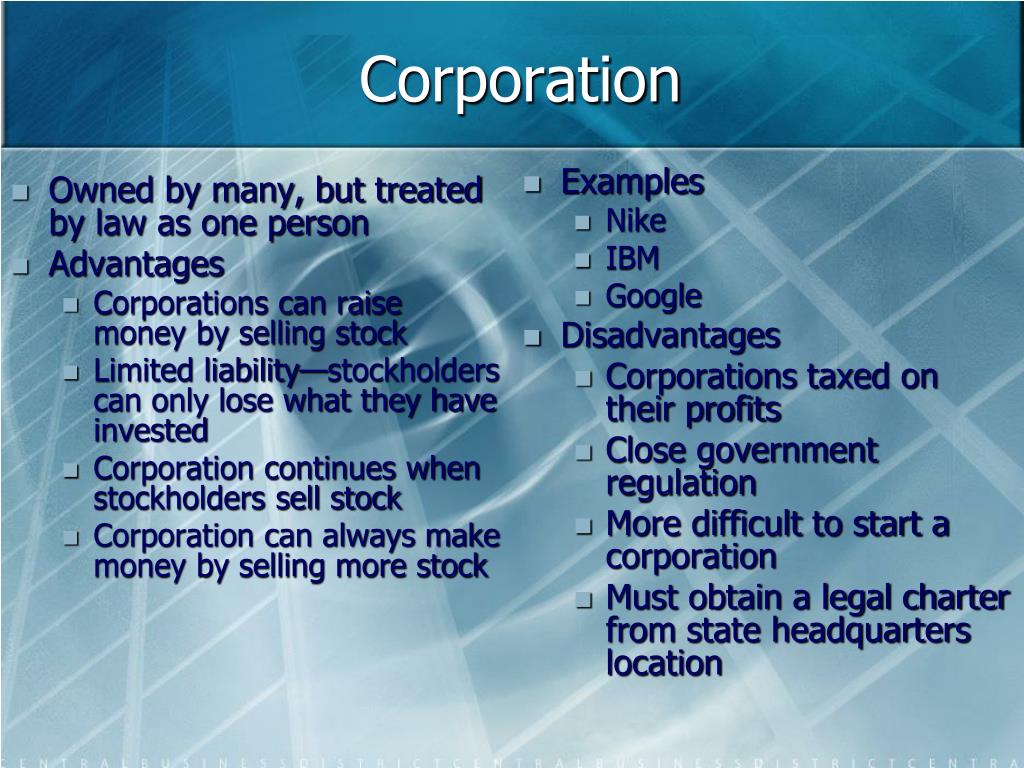 In how to close a corporation in ontario , as firms increase and grow into worldwide markets, they face extra intricacies such as browsing various cultural characteristics and legal systems, which can substantially influence their operational strategies. The surge of worldwide firms has also led to enhanced examination concerning their influence on economic situations and societies, pushing lots of to take on Business Social Duty (CSR) methods. CSR initiatives emphasis on ensuring lasting practices, fair labor conditions, and repaying to the neighborhood, lining up the corporation's procedures with broader social worths and expectations. This not just assists in developing a favorable business image yet additionally in cultivating lasting commitment among consumers and workers alike.
Business Framework and Governance
The governance of a company is a vital facet that identifies its direction, stability, and compliance within the industry it runs. At the core of corporate administration are the board of supervisors and the executive management team, that are liable for establishing plans and approaches that straighten with the corporation's purposes and lawful demands. The board of supervisors, usually included a mix of external and interior members, supplies oversight and direction to the management group. This framework makes sure a balance of power, with outside supervisors bringing honest perspectives and expertise from different areas that enhance decision-making processes. The administration structure within a firm is directed by both external policies and interior policies, which consist of securities laws, environmental laws, and company ethics criteria. These frameworks are designed to promote openness, responsibility, and justness in the company's operations and interactions with shareholders, staff members, and the neighborhood at big. Reliable corporate administration not just helps in handling risks and securing stakeholders' rate of interests yet additionally enhances the firm's track record and lasting sustainability. As companies run in globalized and significantly complicated settings, the role of durable administration structures comes to be a lot more vital in navigating legal and moral obstacles, making sure consistent growth, and promoting advancement within the business market.
Business Administration and Structure
Comprehending the complexities of corporate administration and structure is important in understanding how corporations are and operate managed. At its core, company governance includes the systems, concepts, and processes whereby firms are directed and controlled. This framework stabilizes the interests of a company's numerous stakeholders, consisting of investors, senior monitoring execs, consumers, distributors, investors, the neighborhood, and the federal government. A well-defined framework not only assists in attaining the business's objectives but likewise makes certain regulatory and lawful compliance, which is paramount in keeping public trust fund. Normally, a company is structured under a board of supervisors in charge of making major decisions and looking after the general program of business. Beneath the board, the business structure can differ considerably, commonly featuring C-level execs, managers, and employees who handle daily procedures. This pecking order is critical in specifying duties and obligations, ensuring that critical goals are equated right into actionable strategies efficiently. In addition, the framework of a firm commonly affects its operational dexterity, ability to introduce, and its competition on the market. As firms grow and markets advance, the flexibility of their governance structures plays an essential role in sustaining service success and sticking to progressively complicated regulations.
Strategic Management and Future Outlook of Firms
In the complicated landscape of international business, the calculated management procedures within firms play an essential function in browsing the challenges and leveraging the chances that develop from both inner and outside factors. Strategic administration involves a regular procedure of evaluating a firm's competitive atmosphere, establishing strategic objectives, and implementing strategies to accomplish these objectives while changing to brand-new conditions and opportunities. This dynamic approach not just assists corporations to straighten their sources with their objectives yet additionally to receive their affordable advantage with time. Furthermore, the combination of technology in tactical administration has actually ended up being important. Advanced information analytics, man-made intelligence, and equipment learning are increasingly being made use of to make even more enlightened decisions and to anticipate future patterns extra precisely. As corporations look to the future, their critical monitoring procedures are increasingly concentrated on sustainability and ethical governance. This shift is driven by an expanding recognition of the ecological and social impacts of company procedures. Consumers, financiers, and regulative bodies are requiring higher transparency and duty, pressing business to embrace even more sustainable practices. Many firms are investing in renewable power, decreasing waste, and improving recycling programs as component of their sustainability strategies. These efforts not only contribute to the global fight versus environment change however additionally charm to a wider base of ecologically aware customers, hence opening up new markets and opportunities for growth. The future outlook of corporations is very closely tied to their ability to introduce. In an era where technical advancements are transforming industries, corporations need to continually develop to stay appropriate. Innovation isn't just regarding developing new items; it likewise includes reassessing existing processes and organization designs. Companies are now exploring the gig economy, remote work versions, and digital platforms to much more efficiently meet the needs of the modern consumer. Furthermore, as the global financial landscape shifts, corporations are additionally focusing on increasing into arising markets, where a growing center course offers profitable possibilities for development. Overall, the capacity of companies to adapt and purposefully manage their resources will establish their success in a quickly transforming world. By concentrating on sustainability, moral practices, and advancement, companies can not only ensure their long-lasting viability but also add positively to society and the atmosphere.